From Six Family Photographs to 225 Verified Records
Every family has a box of photographs where half the faces no longer have names, and a handful of family stories that no one has ever checked against the historical record. When we began work on The Grandfather’s Book, the family knew their grandfather’s birth town in northern France and remembered that an ancestor had died early in the First World War.
Over three weeks of archival investigation across departmental civil registers, five-year census rolls, military conscription bureau files, and Belgian parish registers, the inquiry uncovered 225 primary source documents spanning 5 allied surnames back to 1672.
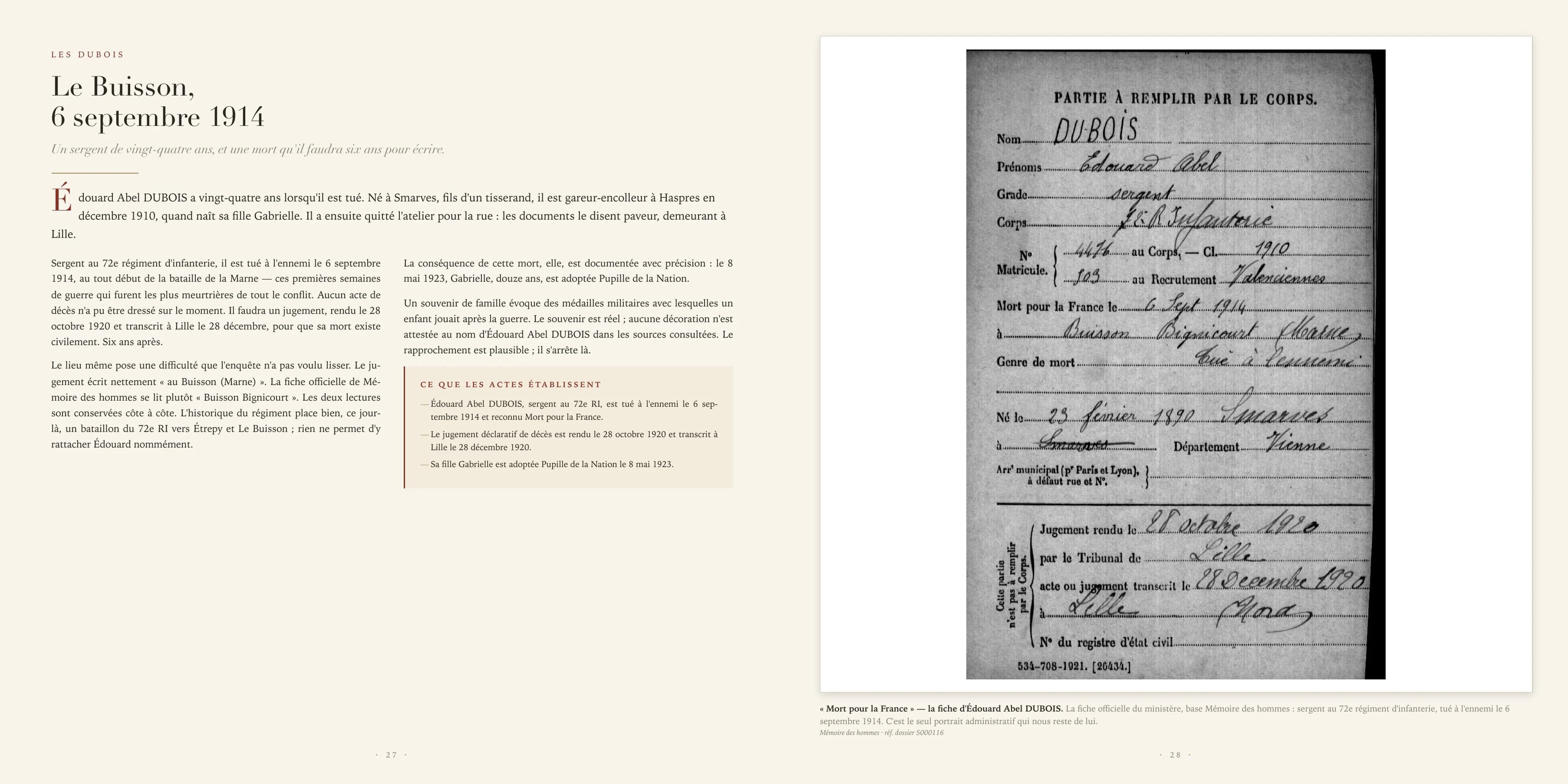
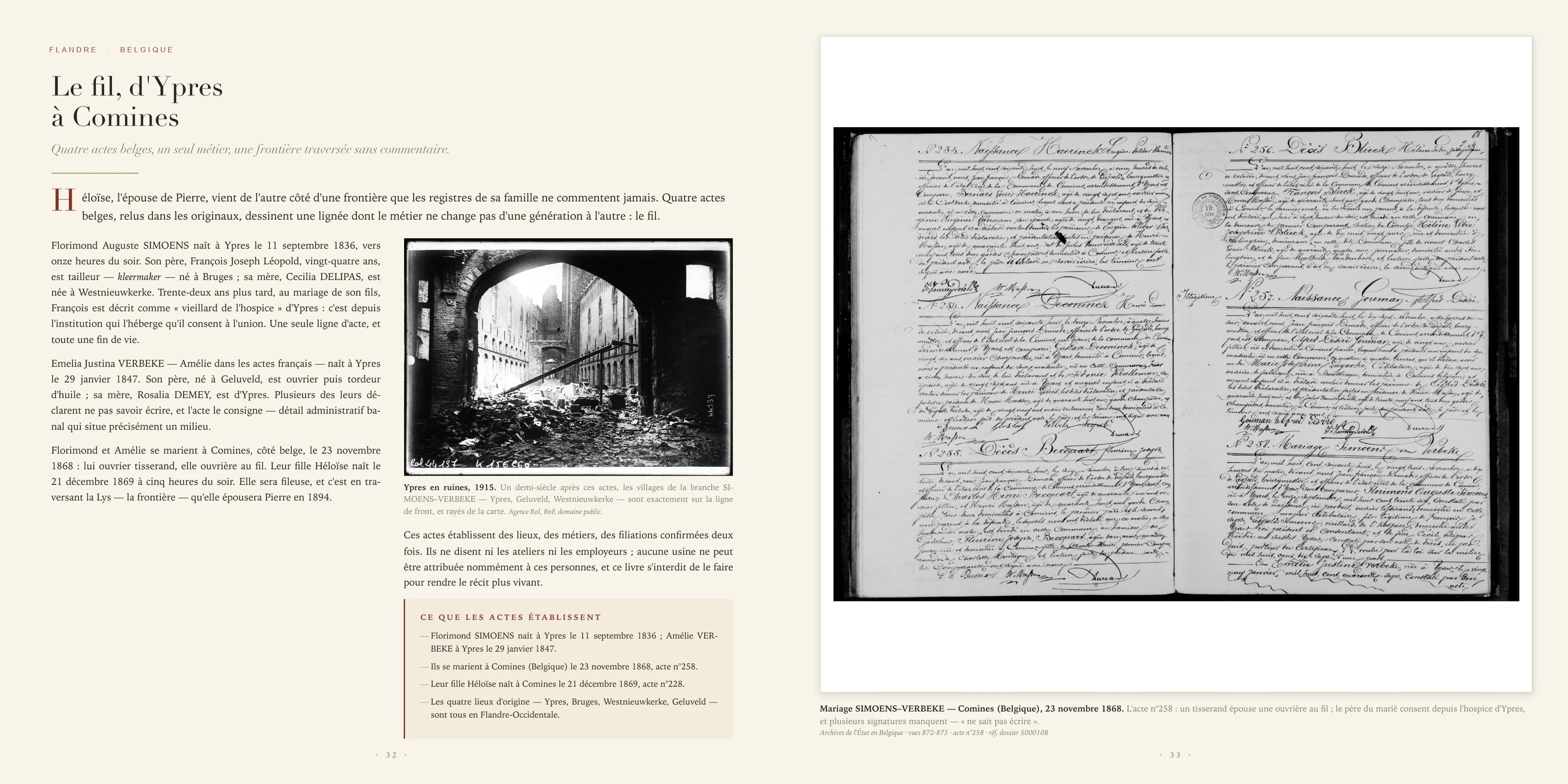
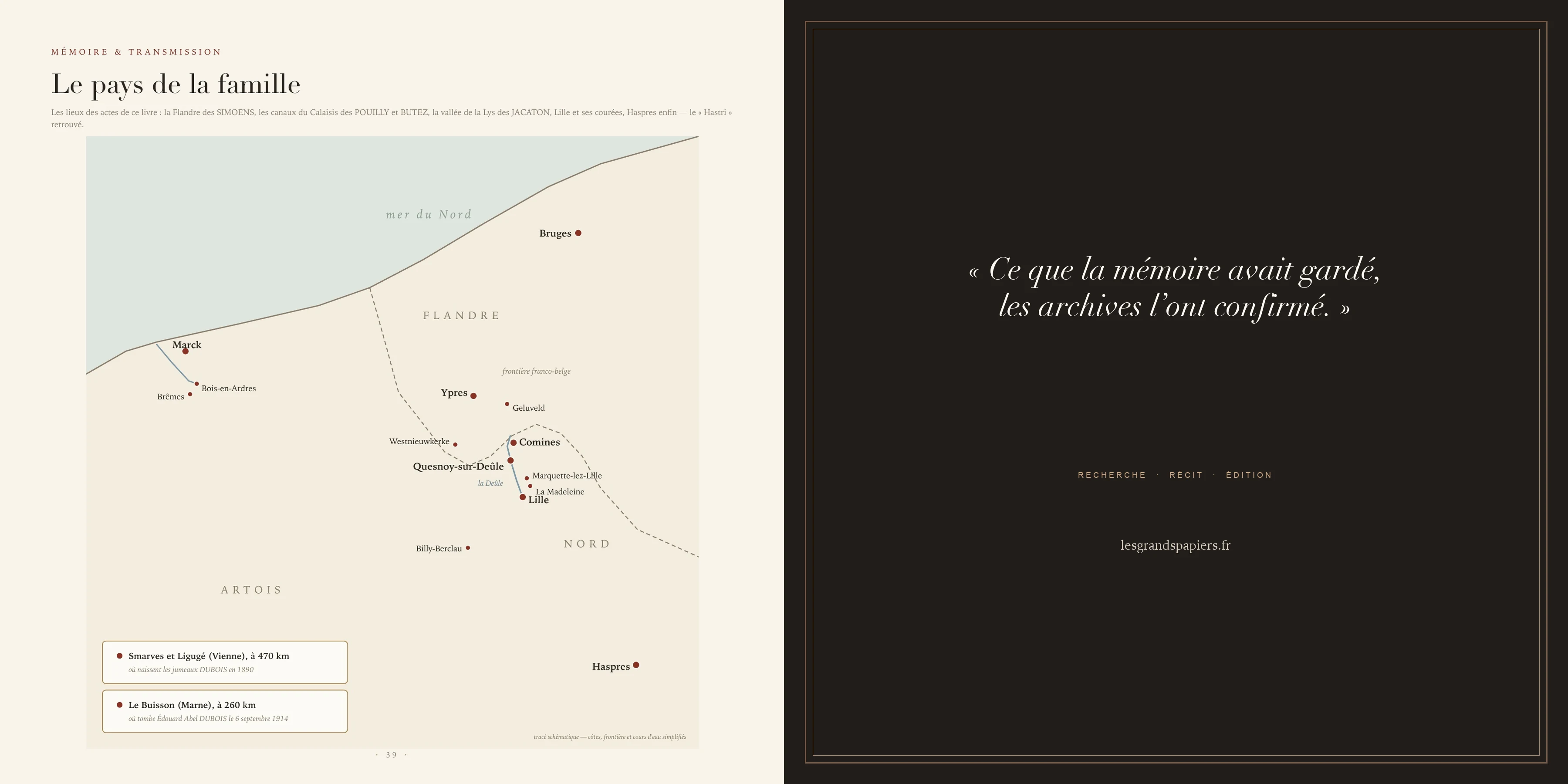
Selected Spreads from the Completed Volume
Why the Book Separates Proven Fact from Family Tradition
In almost every family, oral memory blends true events with shifted dates or merged generations. Our editorial rule is strict: a hypothesis is never presented as a fact. When the archives confirm a family story, the original record is reproduced on the facing page. When a record corrects a legend—or when two documents disagree—we explain the evidence clearly so future generations inherit a trustworthy history.
Frequently Asked Questions
01What did the family actually provide at the start of this commission?
Very little: the grandfather’s full name, his date and place of birth, the names of his parents, and six family photographs kept in a shoebox. Every earlier generation, every census street address, every border crossing in the 1850s, and every August 1914 military record was uncovered in public archives.
02Are the documents inside the book real archival facsimiles?
Yes. Every document reproduced in the book is an authentic civil act, census schedule, military service file, or historical map retrieved from departmental, national, and municipal archives. Next to each reproduction, we provide a clear transcription and historical explanation so no one has to struggle with 19th-century handwriting.
03For an American family, will our book be written entirely in English?
Yes. Your family’s book is written and typeset in clear, literary American English. Whenever an ancestor’s original record is in French, Italian, German, Latin, or Polish, we reproduce the authentic document for visual proof and place a complete English translation and historical commentary right beside it.